Buy schleswig.info ?
We are moving the project
schleswig.info .
Are you interested in purchasing the domain
schleswig.info ?
domain@kv-gmbh.de · 0541-91531010
Buy schleswig.info ?
Can one unlearn rationality?
Rationality is a fundamental aspect of critical thinking and decision-making, so it is not something that can be easily unlearned. However, individuals can be influenced by emotions, biases, and external factors that may cloud their rational judgment. In these cases, it is possible for individuals to work on recognizing and addressing these influences in order to improve their rationality. Through self-awareness, education, and practice, individuals can strengthen their rational thinking skills and make more informed and logical decisions. **
Why is rationality criticized by society?
Rationality is often criticized by society because it can be seen as cold, unemotional, and lacking in empathy. Some people believe that rationality can lead to a lack of understanding and consideration for others' feelings and experiences. Additionally, rationality can be seen as limiting creativity and innovation, as it may prioritize logic and reason over intuition and imagination. Finally, some argue that an overemphasis on rationality can lead to a narrow-minded and inflexible approach to problem-solving, ignoring the complexities of human behavior and emotions. **


Similar search terms for Rationality
Top-Angebote
Products related to Rationality:
-
Rationality: What It Is, Why It Seems Scarce, Why It Matters by Steven Pinker - Non Fiction - PaperbackTitle:. Rationality: What It Is, Why It Seems Scarce, Why It Matters by Steven Pinker Condition: BRAND NEW. Format: Paperback. ISBN: 9780141989860 Overview:. In Rationality, Pinker pushes back against the view that humans are inherently irrational—prone to bias, superstition, and error. He argues that the capacity for reason is real and powerful, but that the modern world loads us with information, uncertainty, and new domains where old intuitions misfire. The paradox is obvious: vaccines were developed in record time, yet misinformation travels faster than the truth. Pinker explains how we rely on mental shortcuts—heuristics—when they serve simple, familiar contexts, but we neglect the robust tools of reasoning that have grown more precise over centuries: formal logic, probability, statistics, causal inference, and careful evaluation of evidence. The book maps these tools into a practical framework that readers can apply to everyday decisions—whether evaluating news stories, diagnosing a problem at work, or weighing risky choices about health and safety. Far from being dry theory, Rationality is a lively, accessible tour through ideas, examples, and experiments that illuminate how to think more clearly under uncertainty. Pinker not only defends rational thinking but also reveals its limits and the ethical responsibilities that come with using reason well. The goal is simple: equip readers with a reliable toolkit for navigating a complex information landscape and to restore confidence in the power of human reason. What Makes This Book Stand Out:. Pinker’s Rationality stands out for its deft blend of philosophy, cognitive science, and practical application. He avoids dense jargon and instead builds a coherent, actionable framework around logic, probability, and causal reasoning, showing how these tools illuminate everyday claims. The writing is brisk, witty, and deeply informative, making sophisticated ideas inviting for newcomers while still rewarding curious readers who already enjoy non-fiction. Each chapter translates abstract principles into concrete skills—how to assess evidence, how to reason under uncertainty, how to distinguish correlation from causation, and how to calibrate confidence in your conclusions. With timely references to misinformation, news media, and public health messaging, the book offers not just critique but a constructive path forward: a clear, reliable method for improving thinking in a complex world. Who This Book Is Perfect For:. Whether you’re a curious reader, a student tackling critical thinking, a professional navigating data-driven decisions, or a parent seeking to encourage evidence-based thinking, Rationality offers tangible value. Fans of science, psychology, and epistemology will appreciate Pinker’s accessible synthesis of ideas, while general readers will gain practical strategies for evaluating headlines and studies, weighing risks, and making informed choices under uncertainty. It’s an excellent pick for...10,99 £*Shipping: 2,99 £Secure redirect to the provider
-
Rationality, Enlightenment Now, The Sense of Style 3 Books Collection Set by Steven Pinker - Non Fiction - Mixed FormatTitles in This Set:. Rationality [Hardcover]. Enlightenment Now. The Sense of Style Condition: BRAND NEW. Format: Mixed lot Overview:. Three essential works by Steven Pinker come together in this thoughtfully designed collection. Rationality (Hardcover) invites you to rethink the cliché that humans are inherently irrational, offering practical tools—logic, probability, causal inference, and decision-making under uncertainty—that sharpen everyday thinking. Enlightenment Now challenges the notion that progress is sliding backward, presenting data-driven evidence that health, safety, knowledge, and well-being have improved dramatically around the world when we follow reason and evidence. The Sense of Style guides modern readers through the craft of writing in a fast, text‑driven age, showing why prose matters for persuasion, clarity, and connection. Together these titles form a cohesive journey from how we think, to how we measure progress, to how we express ourselves with precision. This mixed-format set is ideal for curious minds, students, professionals, and anyone who loves rigorous argument, lucid prose, and a hopeful view of human potential. What Makes This Collection Special:. What makes this collection truly special is the through-line that runs from question to answer. Rationality gives you a practical toolkit—logical thinking, probabilistic reasoning, and a disciplined approach to uncertainty—that helps you interrogate sensational claims and everyday hunches alike. Enlightenment Now then demonstrates why reason and evidence have historically propelled health, safety and knowledge forward, offering a data-backed antidote to doom-laden headlines. The Sense of Style adds the missing piece: the art of communicating those insights clearly and compellingly in today’s fast-paced, text-forward world. The trio speaks to a broad audience: students weighing ideas for essays, professionals making important decisions, and lifelong readers who relish honest debate, practical guidance, and confident prose. Owning the complete set offers a convenient, single-entry point to three influential books that reinforce each other: a durable, curated reading journey that rewards curiosity, study, and discussion. It’s also a thoughtful gift for graduates, colleagues, and book clubs that love thoughtful non-fiction and lively conversation. Books Included in This Collection:. Rationality [Hardcover]. Rationality [Hardcover] challenges the idea that human thinking is doomed to bias and error. Pinker argues that we actually possess powerful reasoning tools—logic, probability, causal inference, and disciplined decision-making—that become especially effective when we apply them to uncertain situations. The book blends accessible examples with careful analysis, helping readers recognise when intuition misleads and how to counter bias with method. Reading it alongside Enlightenment Now and The Sense of Style, you’ll gain not only a better sense of why people think the way...34,99 £*Shipping: 2,99 £Secure redirect to the provider
-
From the Archives: Black History and Culture Value PackThis brand-new series is rooted in a profound commitment to shedding light on some of the important -- and often lesser-known -- aspects of Black history. From the Archives features landmarks, events, people, and artistic endeavors that have played...27,99 $*Shipping: 0,00 $Secure redirect to the provider
-
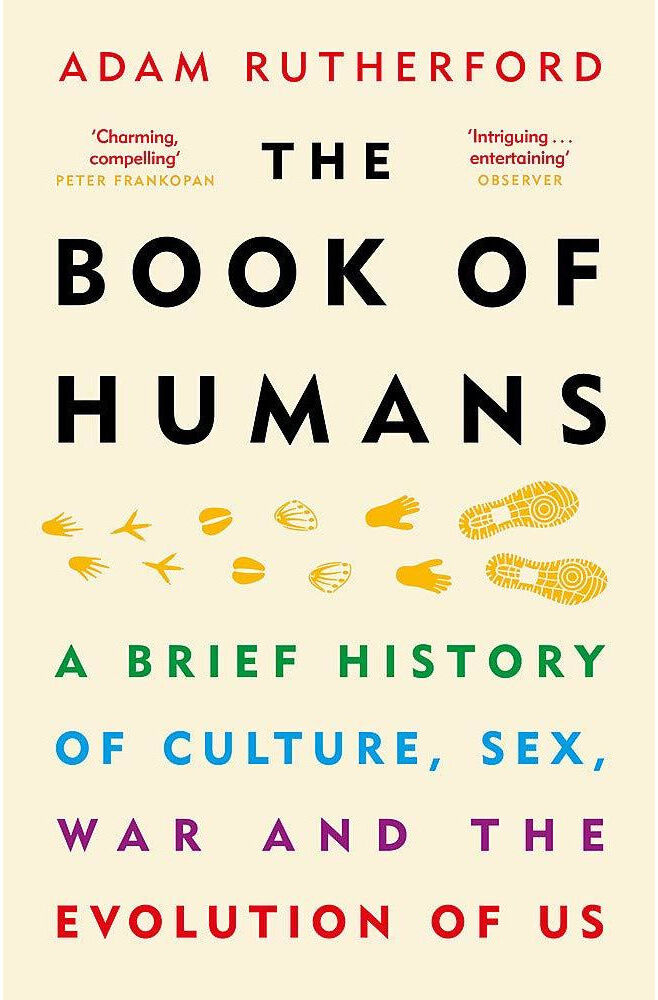
Orion The Book of Humans by Adam Rutherford – A Brief History of Culture, Sex, War & EvolutionWHAT MAKES US HUMAN? Waging war? Sex for pleasure? Creating art? Mastery of fire? In this thrilling tour of the animal kingdom, Adam Rutherford tells the story of how we became the unique creatures we are today. Illuminated by the latest scientific discoveries, THE BOOK OF HUMANS is a dazzling compendium of what unequivocally fixes us as animals, and reveals how we are extraordinary among them.4,98 £*Shipping: 1,99 £Secure redirect to the provider



-
What does Max Weber understand by rationality?
Max Weber understands rationality as a mode of thinking and decision-making that is based on logical reasoning, calculation, and efficiency. He distinguishes between two types of rationality: substantive rationality, which is focused on achieving specific goals or values, and formal rationality, which is concerned with the most efficient means to achieve those goals. Weber also discusses the concept of rationalization, which refers to the increasing dominance of formal rationality in modern society, leading to the bureaucratization and rationalization of social and economic life. Overall, Weber sees rationality as a key driving force in modern society, shaping the way individuals and institutions operate. **
-
How much rationality is there in anger?
Anger is often seen as an emotional response that can cloud rational thinking. However, there can be some rationality in anger as it may be triggered by perceived injustices or violations of one's boundaries. In these cases, anger can serve as a signal that something is wrong and prompt individuals to take action to address the issue. It is important for individuals to acknowledge and understand their anger in order to respond to it in a constructive and rational manner. **
-
What is the pseudo-rationality about Asperger's autists?
Pseudo-rationality in the context of Asperger's autists refers to the tendency for individuals with Asperger's syndrome to exhibit a strong adherence to logic and reason, often at the expense of social and emotional understanding. This can manifest as a focus on factual information and a preference for clear, concrete rules and systems. While this pseudo-rationality can be a strength in certain contexts, it can also lead to difficulties in understanding and navigating social interactions and emotions. It's important to recognize and support the unique strengths and challenges of individuals with Asperger's syndrome. **
-
How can one easily explain Habermas's communicative rationality?
One can easily explain Habermas's communicative rationality by understanding it as a theory that emphasizes the importance of communication and dialogue in the formation of rational consensus. According to Habermas, communicative rationality is achieved through open and inclusive discourse, where individuals engage in rational argumentation and seek mutual understanding. This process allows for the negotiation of differing perspectives and the development of shared norms and values. Ultimately, communicative rationality aims to create a more just and democratic society by fostering rational communication and decision-making. **


Have you acted out of reasons of rationality?
As an AI language model, I do not have personal experiences or emotions, so I do not act out of reasons of rationality or any other motivations. My responses are generated based on patterns in the data I have been trained on and are designed to provide helpful and informative answers to the best of my ability. **
How can one maintain rationality when feeling angry?
When feeling angry, it is important to take a step back and try to understand the source of the anger. This can help in identifying any irrational thoughts or beliefs that may be fueling the anger. It is also helpful to practice deep breathing or other relaxation techniques to calm the mind and body. Additionally, seeking support from a trusted friend or therapist can provide a different perspective and help in maintaining rationality. Finally, taking time to reflect on the situation and consider the potential consequences of acting on the anger can also aid in maintaining rationality. **
Top-Angebote
Products related to Rationality:
-
Steven Pinker Collection 2 Books Set Rationality, Enlightenment Now Case for ReasonDescription:. Condition: BRAND NEW. Format: Paperback. Enlightenment Now: The Case for Reason, Science, Humanism, and Progress ..... If you follow the headlines, the world in the 21st century appears to. be sinking into chaos, hatred, and irrationality. Yet Steven Pinker. shows that this is an illusion - a symptom of historical amnesia and. statistical fallacies. If you follow the trendlines rather than the. headlines, you discover that our lives have become longer, healthier,. safer, happier, more peaceful, more stimulating and more prosperous -. not just in the West, but worldwide. Such progress is no accident:. it's the gift of a coherent and inspiring value system that many of us. embrace without even realizing it. These are the values of the. Enlightenment: of reason, science, humanism and progress...... Rationality: What It Is, Why It Seems Scarce, Why It Matters. In Rationality, Pinker rejects the cynical cliché that humans are. simply an irrational species - cavemen out of time fatally cursed with. biases, fallacies and illusions. After all, we discovered the laws of. nature, lengthened and enriched our lives and set the benchmarks for. rationality itself. Instead, he explains, we think in ways that suit. the low-tech contexts in which we spend most of our lives, but fail to. take advantage of the powerful tools of reasoning we have built up. over millennia: logic, critical thinking, probability, causal. inference, and decision-making under uncertainty. These tools are not. a standard part of our educational curricula, and have never been. presented clearly and entertainingly in a single book - until now..... Title. Steven Pinker Collection 2 Books Set Rationality, Enlightenment Now Case for Reason. Delivery. Content. Reviews24,99 £*Shipping: 2,99 £Secure redirect to the provider
-
Rationality: What It Is, Why It Seems Scarce, Why It Matters by Steven PinkerDescription:. Condition: BRAND NEW. Format: Hardcover. In Rationality, Pinker rejects the cynical cliché that humans are simply an irrational species - cavemen out of time fatally cursed with biases, fallacies and illusions. After all, we discovered the laws of nature, lengthened and enriched our lives and set the benchmarks for rationality itself. Instead, he explains, we think in ways that suit the low-tech contexts in which we spend most of our lives, but fail to take advantage of the powerful tools of reasoning we have built up over millennia: logic, critical thinking, probability, causal inference, and decision-making under uncertainty. These tools are not a standard part of our educational curricula, and have never been presented clearly and entertainingly in a single book - until now.. Title. Rationality: What It Is, Why It Seems Scarce, Why It Matters by Steven Pinker. Delivery. Content. Reviews99,99 £*Shipping: 0,00 £Secure redirect to the provider
-
Rationality: What It Is, Why It Seems Scarce, Why It Matters by Steven Pinker - Non Fiction - PaperbackTitle:. Rationality: What It Is, Why It Seems Scarce, Why It Matters by Steven Pinker Condition: BRAND NEW. Format: Paperback. ISBN: 9780141989860 Overview:. In Rationality, Pinker pushes back against the view that humans are inherently irrational—prone to bias, superstition, and error. He argues that the capacity for reason is real and powerful, but that the modern world loads us with information, uncertainty, and new domains where old intuitions misfire. The paradox is obvious: vaccines were developed in record time, yet misinformation travels faster than the truth. Pinker explains how we rely on mental shortcuts—heuristics—when they serve simple, familiar contexts, but we neglect the robust tools of reasoning that have grown more precise over centuries: formal logic, probability, statistics, causal inference, and careful evaluation of evidence. The book maps these tools into a practical framework that readers can apply to everyday decisions—whether evaluating news stories, diagnosing a problem at work, or weighing risky choices about health and safety. Far from being dry theory, Rationality is a lively, accessible tour through ideas, examples, and experiments that illuminate how to think more clearly under uncertainty. Pinker not only defends rational thinking but also reveals its limits and the ethical responsibilities that come with using reason well. The goal is simple: equip readers with a reliable toolkit for navigating a complex information landscape and to restore confidence in the power of human reason. What Makes This Book Stand Out:. Pinker’s Rationality stands out for its deft blend of philosophy, cognitive science, and practical application. He avoids dense jargon and instead builds a coherent, actionable framework around logic, probability, and causal reasoning, showing how these tools illuminate everyday claims. The writing is brisk, witty, and deeply informative, making sophisticated ideas inviting for newcomers while still rewarding curious readers who already enjoy non-fiction. Each chapter translates abstract principles into concrete skills—how to assess evidence, how to reason under uncertainty, how to distinguish correlation from causation, and how to calibrate confidence in your conclusions. With timely references to misinformation, news media, and public health messaging, the book offers not just critique but a constructive path forward: a clear, reliable method for improving thinking in a complex world. Who This Book Is Perfect For:. Whether you’re a curious reader, a student tackling critical thinking, a professional navigating data-driven decisions, or a parent seeking to encourage evidence-based thinking, Rationality offers tangible value. Fans of science, psychology, and epistemology will appreciate Pinker’s accessible synthesis of ideas, while general readers will gain practical strategies for evaluating headlines and studies, weighing risks, and making informed choices under uncertainty. It’s an excellent pick for...10,99 £*Shipping: 2,99 £Secure redirect to the provider
-
Rationality, Enlightenment Now, The Sense of Style 3 Books Collection Set by Steven Pinker - Non Fiction - Mixed FormatTitles in This Set:. Rationality [Hardcover]. Enlightenment Now. The Sense of Style Condition: BRAND NEW. Format: Mixed lot Overview:. Three essential works by Steven Pinker come together in this thoughtfully designed collection. Rationality (Hardcover) invites you to rethink the cliché that humans are inherently irrational, offering practical tools—logic, probability, causal inference, and decision-making under uncertainty—that sharpen everyday thinking. Enlightenment Now challenges the notion that progress is sliding backward, presenting data-driven evidence that health, safety, knowledge, and well-being have improved dramatically around the world when we follow reason and evidence. The Sense of Style guides modern readers through the craft of writing in a fast, text‑driven age, showing why prose matters for persuasion, clarity, and connection. Together these titles form a cohesive journey from how we think, to how we measure progress, to how we express ourselves with precision. This mixed-format set is ideal for curious minds, students, professionals, and anyone who loves rigorous argument, lucid prose, and a hopeful view of human potential. What Makes This Collection Special:. What makes this collection truly special is the through-line that runs from question to answer. Rationality gives you a practical toolkit—logical thinking, probabilistic reasoning, and a disciplined approach to uncertainty—that helps you interrogate sensational claims and everyday hunches alike. Enlightenment Now then demonstrates why reason and evidence have historically propelled health, safety and knowledge forward, offering a data-backed antidote to doom-laden headlines. The Sense of Style adds the missing piece: the art of communicating those insights clearly and compellingly in today’s fast-paced, text-forward world. The trio speaks to a broad audience: students weighing ideas for essays, professionals making important decisions, and lifelong readers who relish honest debate, practical guidance, and confident prose. Owning the complete set offers a convenient, single-entry point to three influential books that reinforce each other: a durable, curated reading journey that rewards curiosity, study, and discussion. It’s also a thoughtful gift for graduates, colleagues, and book clubs that love thoughtful non-fiction and lively conversation. Books Included in This Collection:. Rationality [Hardcover]. Rationality [Hardcover] challenges the idea that human thinking is doomed to bias and error. Pinker argues that we actually possess powerful reasoning tools—logic, probability, causal inference, and disciplined decision-making—that become especially effective when we apply them to uncertain situations. The book blends accessible examples with careful analysis, helping readers recognise when intuition misleads and how to counter bias with method. Reading it alongside Enlightenment Now and The Sense of Style, you’ll gain not only a better sense of why people think the way...34,99 £*Shipping: 2,99 £Secure redirect to the provider
-
Can one unlearn rationality?
Rationality is a fundamental aspect of critical thinking and decision-making, so it is not something that can be easily unlearned. However, individuals can be influenced by emotions, biases, and external factors that may cloud their rational judgment. In these cases, it is possible for individuals to work on recognizing and addressing these influences in order to improve their rationality. Through self-awareness, education, and practice, individuals can strengthen their rational thinking skills and make more informed and logical decisions. **
-
Why is rationality criticized by society?
Rationality is often criticized by society because it can be seen as cold, unemotional, and lacking in empathy. Some people believe that rationality can lead to a lack of understanding and consideration for others' feelings and experiences. Additionally, rationality can be seen as limiting creativity and innovation, as it may prioritize logic and reason over intuition and imagination. Finally, some argue that an overemphasis on rationality can lead to a narrow-minded and inflexible approach to problem-solving, ignoring the complexities of human behavior and emotions. **
-
What does Max Weber understand by rationality?
Max Weber understands rationality as a mode of thinking and decision-making that is based on logical reasoning, calculation, and efficiency. He distinguishes between two types of rationality: substantive rationality, which is focused on achieving specific goals or values, and formal rationality, which is concerned with the most efficient means to achieve those goals. Weber also discusses the concept of rationalization, which refers to the increasing dominance of formal rationality in modern society, leading to the bureaucratization and rationalization of social and economic life. Overall, Weber sees rationality as a key driving force in modern society, shaping the way individuals and institutions operate. **
-
How much rationality is there in anger?
Anger is often seen as an emotional response that can cloud rational thinking. However, there can be some rationality in anger as it may be triggered by perceived injustices or violations of one's boundaries. In these cases, anger can serve as a signal that something is wrong and prompt individuals to take action to address the issue. It is important for individuals to acknowledge and understand their anger in order to respond to it in a constructive and rational manner. **
Similar search terms for Rationality
-
From the Archives: Black History and Culture Value PackThis brand-new series is rooted in a profound commitment to shedding light on some of the important -- and often lesser-known -- aspects of Black history. From the Archives features landmarks, events, people, and artistic endeavors that have played...27,99 $*Shipping: 0,00 $Secure redirect to the provider
-
Orion The Book of Humans by Adam Rutherford – A Brief History of Culture, Sex, War & EvolutionWHAT MAKES US HUMAN? Waging war? Sex for pleasure? Creating art? Mastery of fire? In this thrilling tour of the animal kingdom, Adam Rutherford tells the story of how we became the unique creatures we are today. Illuminated by the latest scientific discoveries, THE BOOK OF HUMANS is a dazzling compendium of what unequivocally fixes us as animals, and reveals how we are extraordinary among them.4,98 £*Shipping: 1,99 £Secure redirect to the provider
-
DK 100 History Series 4 Books Collection Set - History, Events, Inventions, Women - Non Fiction - PaperbackTitles in This Set:. 100 People Who Made History. 100 Events That Made History. 100 Inventions That Made History. 100 Women Who Made History Condition: BRAND NEW. Format: Paperback Overview:. Dive into four gateways to the past with the 100 History Series 4 Books Collection Set. Crafted for curious minds, this paperback quartet turns big ideas into bite-sized, visually engaging profiles that are easy to read. Explore the trailblazers who reshaped culture, the moments that redirected civilizations, the inventions that power daily life, and the remarkable women who advanced science, politics, sport, and art. Each title offers concise entries, vivid illustrations, and clear timelines that bring history to life. Perfect for reluctant readers who enjoy fast-paced, picture-rich pages, as well as history lovers seeking a portable quick-reference library. Together, these four volumes form a complete, affordable history journey in one beautifully bound set. What Makes This Collection Special:. This quartet forms a cohesive, all-ages history library in four approachable strands. Readers can start with the people who defined eras, move through pivotal events, explore inventions that changed daily life, and celebrate the extraordinary women who shaped society. The consistent design—same accessible tone, layout, and eye-catching visuals—creates a satisfying reading rhythm that invites steady progress. For parents, teachers, and gift-givers, the set doubles as a curriculum-friendly resource that supports homework and discussions while sparking curiosity long after the first page. It’s a complete toolkit for building historical literacy, critical thinking, and a lifelong love of learning. Books Included in This Collection:. 100 People Who Made History. From scientists, artists, and political leaders to cultural icons, this volume distills 100 lives into concise biographies. Each entry highlights the figure’s impact with clear context and vivid visuals, helping readers see how individual choices ripple through time. Short, engaging profiles invite discussion, curiosity, and inspiration, making it ideal for bedtime reading or classroom reference that builds early historical literacy. 100 Events That Made History. From ancient trade routes to modern breakthroughs, this volume charts 100 transformative moments that shaped human civilization. Each entry explains the event’s significance, the timeline, and the aftermath in a way that’s accessible to younger readers without sacrificing depth. Crisp illustrations and sidebars illuminate cause-and-effect, helping readers connect past events with present-day life and ideas. 100 Inventions That Made History. This book surveys 100 breakthroughs that quietly power daily life—from everyday tools to revolutionary technologies. Each entry explains what the invention does, who contributed to its development, and why it mattered in its era and beyond. With approachable diagrams and compact explanations, it makes the story of...99,99 £*Shipping: 0,00 £Secure redirect to the provider
-
The Book of Humans: A Brief History of Culture, Sex, War and the Evolution of Us by Adam Rutherford - Non Fiction - PaperbackTitle:. The Book of Humans: A Brief History of Culture, Sex, War and the Evolution of Us Condition: BRAND NEW. Format: Paperback. ISBN: Overview:. In The Book of Humans, Adam Rutherford invites readers on a provocative tour through the animal kingdom and across human history to answer a single, enduring question: what makes us human? Drawing on genetics, archaeology, neuroscience, and anthropology, the book reveals how culture, sexuality, warfare, language, and emotion are woven into our evolutionary story. Rutherford presents complex science in clear, vivid prose, turning big ideas into accessible, evidence-based insights. He argues that humans are both remarkably unique and deeply continuous with the animal world, proving that our most celebrated innovations—art, religion, science, social justice—emerge from a natural, biological foundation. This paperback edition is ideal for curious readers, students, and gift buyers who want a compelling map of what shapes human life today. Whether you’re seeking a thoughtful popular science read that challenges assumptions or a rigorous primer for a classroom discussion, this book rewards careful reading and engagement. What Makes This Book Stand Out:. Adam Rutherford’s warmth as a guide and his knack for making science feel human are what set The Book of Humans apart. Rather than a dry survey of facts, he threads genetics with culture, showing how our DNA interacts with environment to shape art, politics, and daily life. The book dismantles myths about human nature, offering fresh perspectives on why societies form, how conflict arises, and what drives relationships, sexuality, and cooperation. Rich with real-world examples—from animal behavior to ancient artifacts—this is a work that invites readers to question clichés while gaining a clearer, integrated view of humanity. The result is a readable, thought-provoking journey into who we are and why we do the things we do. Who This Book Is Perfect For:. This title is ideal for adults who crave rigorous,Accessible popular science that respects your intelligence, science enthusiasts seeking a concise synthesis of biology and culture, and curious non-fiction readers eager for a fresh take on human evolution. It’s a superb pick for book clubs, thoughtful gifts for graduates, teachers incorporating cross-disciplinary material, and fans of science communication who enjoyed Rutherford’s other work. If you’ve ever wondered why humans create culture, why rituals endure, or how biology underpins social life, this book answers those questions with clarity and punch. Key Highlights:. Explores the biological roots of culture, art, and language. Demystifies human uniqueness while linking us to other animals. Accessible, engaging writing that makes complex science approachable. Challenging preconceptions about sex, war, cooperation and conflict. Thought-provoking, discussion-worthy examples for classrooms and book clubs. Solid foundation for further reading in evolution,...2,99 £*Shipping: 2,99 £Secure redirect to the provider
-
What is the pseudo-rationality about Asperger's autists?
Pseudo-rationality in the context of Asperger's autists refers to the tendency for individuals with Asperger's syndrome to exhibit a strong adherence to logic and reason, often at the expense of social and emotional understanding. This can manifest as a focus on factual information and a preference for clear, concrete rules and systems. While this pseudo-rationality can be a strength in certain contexts, it can also lead to difficulties in understanding and navigating social interactions and emotions. It's important to recognize and support the unique strengths and challenges of individuals with Asperger's syndrome. **
-
How can one easily explain Habermas's communicative rationality?
One can easily explain Habermas's communicative rationality by understanding it as a theory that emphasizes the importance of communication and dialogue in the formation of rational consensus. According to Habermas, communicative rationality is achieved through open and inclusive discourse, where individuals engage in rational argumentation and seek mutual understanding. This process allows for the negotiation of differing perspectives and the development of shared norms and values. Ultimately, communicative rationality aims to create a more just and democratic society by fostering rational communication and decision-making. **
-
Have you acted out of reasons of rationality?
As an AI language model, I do not have personal experiences or emotions, so I do not act out of reasons of rationality or any other motivations. My responses are generated based on patterns in the data I have been trained on and are designed to provide helpful and informative answers to the best of my ability. **
-
How can one maintain rationality when feeling angry?
When feeling angry, it is important to take a step back and try to understand the source of the anger. This can help in identifying any irrational thoughts or beliefs that may be fueling the anger. It is also helpful to practice deep breathing or other relaxation techniques to calm the mind and body. Additionally, seeking support from a trusted friend or therapist can provide a different perspective and help in maintaining rationality. Finally, taking time to reflect on the situation and consider the potential consequences of acting on the anger can also aid in maintaining rationality. **
* All prices are inclusive of VAT and, if applicable, plus shipping costs. The offer information is based on the details provided by the respective shop and is updated through automated processes. Real-time updates do not occur, so deviations can occur in individual cases. ** Note: Parts of this content were created by AI.