Buy schleswig.info ?
We are moving the project
schleswig.info .
Are you interested in purchasing the domain
schleswig.info ?
domain@kv-gmbh.de · 0541-91531010
Buy schleswig.info ?
Which microscope is a nano-microscope?
A nano-microscope is a type of microscope that is capable of imaging objects at the nanoscale, which is on the order of billionths of a meter. One example of a nano-microscope is the scanning tunneling microscope (STM), which uses a sharp metal tip to scan the surface of a sample and create a detailed image of its atomic structure. Another example is the atomic force microscope (AFM), which uses a sharp tip to measure forces between the tip and the sample surface, allowing for high-resolution imaging of nanoscale features. Both of these microscopes are capable of imaging at the nanoscale and are therefore considered nano-microscopes. **
Which objectives are compatible with this microscope?
This microscope is compatible with objectives that have a magnification range of 4x to 100x. It is also compatible with objectives that have a numerical aperture (NA) of up to 1.4. Additionally, objectives with different working distances can be used with this microscope, making it versatile for various imaging needs. **


Similar search terms for Scholastic-Microscope-with-smartphone
Top-Angebote
Products related to Scholastic-Microscope-with-smartphone:
-
Combo Retail Shop Kids Science Microscope, Pocket Microscope, Electric Mini Handheld Microscope, Outdoor Educational Toy, Child Interest pinkUnlock the wonders of science with the Kids Science Microscope 60200x, designed to captivate young minds and inspire a passion for discovery. This electric mini handheld microscope offers a portable, easytouse solution for children who love to...44,97 $*Shipping: 0,00 $Secure redirect to the provider
-
Scholastic National Curriculum History Planning Guide With 100 Lessons And Progression - Non Fiction - PaperbackTitle:. National Curriculum History Planning Guide With 100 Lessons And Progression Format: Paperback Overview:. Planning a cohesive history curriculum across primary and early secondary years demands both structural clarity and curriculum alignment, which is precisely where this comprehensive guide steps in. Designed specifically to bridge the gap between abstract statutory requirements and practical classroom delivery, it functions as an essential working manual for educators tasked with mapping knowledge sequences, lesson objectives, and chronological milestones. Packed with exactly one hundred ready-to-deploy lessons, this non-fiction planning resource removes the heavy lifting from your scheme development process while retaining the flexibility needed to adapt to mixed-ability cohorts. Each module has been carefully sequenced to reflect the latest national curriculum standards, ensuring that coverage remains rigorous and assessment-friendly throughout the academic year. By pairing medium-term roadmaps with long-term progression tracks, the guide transforms overwhelming syllabus demands into manageable weekly targets. Whether you are coordinating departmental schemes or refreshing your own personal teaching archive, it provides the scaffolding necessary to maintain pace without sacrificing depth. Every session outline integrates core historical enquiry skills, source analysis techniques, and contextual understanding, giving you a reliable foundation to build upon. With its emphasis on sustainable workload management and measurable student progress, this volume serves as a practical companion for navigating modern history education with confidence across diverse classroom settings. What Makes This Book Stand Out:. A common dilemma facing history teachers is finding resources that balance statutory compliance with genuine pedagogical engagement, and this guide resolves that tension through highly structured adaptability. Unlike static textbook supplements, it features editable long- and medium-term planning frameworks that empower subject leaders and individual practitioners to customise pacing based on their cohort’s needs. The booklet prioritises progression tracking over rigid prescription, meaning educators can identify where pupils solidify chronological understanding versus where they require targeted scaffolding in historical explanation. Its layout deliberately separates overarching term goals from granular lesson activities, streamlining preparation time while safeguarding instructional coherence. Furthermore, the inclusion of one hundred distinct sessions guarantees comprehensive topic coverage without forcing artificial repetitions. Each plan integrates cross-curricular links, vocabulary building blocks, and formative assessment checkpoints that align directly with current marking expectations. This pragmatic approach ensures that busy teachers retain full creative control over delivery methods while still meeting every...20,00 £*Shipping: 2,99 £Secure redirect to the provider
-
Scholastic Teaching Resources Scholastic Success With Grade 5 Value PackReinforce key skills with these exciting practice books!This set includes:Scholastic Success With Grade 5: Fractions & DecimalsScholastic Success With Grade 5: GrammarScholastic Success With Grade 5: MathScholastic Success With Grade 5: Math...41,59 $*Shipping: 0,00 $Secure redirect to the provider


-
Can one prepare with an electron microscope?
One cannot physically prepare with an electron microscope in the same way one would prepare with other tools or resources. However, one can mentally prepare by studying the principles of electron microscopy, understanding how to operate the equipment, and familiarizing oneself with the types of samples that can be analyzed using an electron microscope. Additionally, gaining hands-on experience through training or workshops with an electron microscope can help one become proficient in using this powerful tool for scientific research. **
-
Can I see viruses with this microscope?
No, viruses are much smaller than the resolution capabilities of a light microscope. Viruses typically range in size from 20 to 400 nanometers, which is below the limit of resolution for a light microscope. To see viruses, you would need an electron microscope, which has much higher magnification and resolution capabilities. **
-
What can you see with a microscope?
With a microscope, you can see tiny details that are not visible to the naked eye. This includes cells, bacteria, fungi, and other microorganisms. Microscopes can also reveal the structure of materials at a microscopic level, allowing for the examination of things like crystals, fibers, and other small particles. Overall, microscopes provide a way to explore and study the intricate and often hidden world of the very small. **
-
With which microscope can I see bacteria?
You can see bacteria with a light microscope, also known as an optical microscope. This type of microscope uses visible light and lenses to magnify the image of the bacteria, allowing them to be seen at a higher resolution. However, to see bacteria in more detail, such as their internal structures, a higher-powered microscope like an electron microscope would be needed. **

Can you prepare with an electron microscope?
No, you cannot prepare with an electron microscope. Electron microscopes are used for imaging and analyzing samples at a very high magnification and resolution, but they are not used for sample preparation. Sample preparation for electron microscopy typically involves fixing, dehydrating, embedding, sectioning, and staining the sample using specific techniques and equipment before it can be imaged with an electron microscope. **
Can one see blood cells with a light microscope or does one need an electron microscope?
One can see blood cells with a light microscope. Blood cells, such as red blood cells, white blood cells, and platelets, are large enough to be visible under a light microscope, which uses visible light to magnify the sample. Electron microscopes, on the other hand, are used to visualize much smaller structures, such as viruses and cellular organelles, at a much higher magnification. Therefore, a light microscope is sufficient for observing blood cells. **
Top-Angebote
Products related to Scholastic-Microscope-with-smartphone:
-
Scholastic Microscope (with smartphone adapter)Travel deep into the microscopic realm! With this high-quality student microscope, Thames & Kosmos unlocks wonders of the world that are too small to see with the naked eye. Plus, the universal smartphone adapter lets you use your own smartphone...42,99 $*Shipping: 0,00 $Secure redirect to the provider
-
Retailers Go Educational Mini Handheld Microscope With LED Light Battery Powered Kid Science Experiment Pocket Microscope Kids Scienc Educational Mini Handheld Microscope With LED Light Battery Powered Kid Science Experiment Pocket Microscope Kids SciencFeature:1. Safe Material: The mini pocket microscope is made of safe and durable ABS material, ensuring reliability, odorlessness, and resistance to breakage. It is particularly suitable for children to play with, providing a safe and enjoyable...39,97 $*Shipping: 0,00 $Secure redirect to the provider
-
Combo Retail Shop Kids Science Microscope, Pocket Microscope, Electric Mini Handheld Microscope, Outdoor Educational Toy, Child Interest pinkUnlock the wonders of science with the Kids Science Microscope 60200x, designed to captivate young minds and inspire a passion for discovery. This electric mini handheld microscope offers a portable, easytouse solution for children who love to...44,97 $*Shipping: 0,00 $Secure redirect to the provider
-
Scholastic National Curriculum History Planning Guide With 100 Lessons And Progression - Non Fiction - PaperbackTitle:. National Curriculum History Planning Guide With 100 Lessons And Progression Format: Paperback Overview:. Planning a cohesive history curriculum across primary and early secondary years demands both structural clarity and curriculum alignment, which is precisely where this comprehensive guide steps in. Designed specifically to bridge the gap between abstract statutory requirements and practical classroom delivery, it functions as an essential working manual for educators tasked with mapping knowledge sequences, lesson objectives, and chronological milestones. Packed with exactly one hundred ready-to-deploy lessons, this non-fiction planning resource removes the heavy lifting from your scheme development process while retaining the flexibility needed to adapt to mixed-ability cohorts. Each module has been carefully sequenced to reflect the latest national curriculum standards, ensuring that coverage remains rigorous and assessment-friendly throughout the academic year. By pairing medium-term roadmaps with long-term progression tracks, the guide transforms overwhelming syllabus demands into manageable weekly targets. Whether you are coordinating departmental schemes or refreshing your own personal teaching archive, it provides the scaffolding necessary to maintain pace without sacrificing depth. Every session outline integrates core historical enquiry skills, source analysis techniques, and contextual understanding, giving you a reliable foundation to build upon. With its emphasis on sustainable workload management and measurable student progress, this volume serves as a practical companion for navigating modern history education with confidence across diverse classroom settings. What Makes This Book Stand Out:. A common dilemma facing history teachers is finding resources that balance statutory compliance with genuine pedagogical engagement, and this guide resolves that tension through highly structured adaptability. Unlike static textbook supplements, it features editable long- and medium-term planning frameworks that empower subject leaders and individual practitioners to customise pacing based on their cohort’s needs. The booklet prioritises progression tracking over rigid prescription, meaning educators can identify where pupils solidify chronological understanding versus where they require targeted scaffolding in historical explanation. Its layout deliberately separates overarching term goals from granular lesson activities, streamlining preparation time while safeguarding instructional coherence. Furthermore, the inclusion of one hundred distinct sessions guarantees comprehensive topic coverage without forcing artificial repetitions. Each plan integrates cross-curricular links, vocabulary building blocks, and formative assessment checkpoints that align directly with current marking expectations. This pragmatic approach ensures that busy teachers retain full creative control over delivery methods while still meeting every...20,00 £*Shipping: 2,99 £Secure redirect to the provider
-
Which microscope is a nano-microscope?
A nano-microscope is a type of microscope that is capable of imaging objects at the nanoscale, which is on the order of billionths of a meter. One example of a nano-microscope is the scanning tunneling microscope (STM), which uses a sharp metal tip to scan the surface of a sample and create a detailed image of its atomic structure. Another example is the atomic force microscope (AFM), which uses a sharp tip to measure forces between the tip and the sample surface, allowing for high-resolution imaging of nanoscale features. Both of these microscopes are capable of imaging at the nanoscale and are therefore considered nano-microscopes. **
-
Which objectives are compatible with this microscope?
This microscope is compatible with objectives that have a magnification range of 4x to 100x. It is also compatible with objectives that have a numerical aperture (NA) of up to 1.4. Additionally, objectives with different working distances can be used with this microscope, making it versatile for various imaging needs. **
-
Can one prepare with an electron microscope?
One cannot physically prepare with an electron microscope in the same way one would prepare with other tools or resources. However, one can mentally prepare by studying the principles of electron microscopy, understanding how to operate the equipment, and familiarizing oneself with the types of samples that can be analyzed using an electron microscope. Additionally, gaining hands-on experience through training or workshops with an electron microscope can help one become proficient in using this powerful tool for scientific research. **
-
Can I see viruses with this microscope?
No, viruses are much smaller than the resolution capabilities of a light microscope. Viruses typically range in size from 20 to 400 nanometers, which is below the limit of resolution for a light microscope. To see viruses, you would need an electron microscope, which has much higher magnification and resolution capabilities. **
Similar search terms for Scholastic-Microscope-with-smartphone
-
Scholastic Teaching Resources Scholastic Success With Grade 5 Value PackReinforce key skills with these exciting practice books!This set includes:Scholastic Success With Grade 5: Fractions & DecimalsScholastic Success With Grade 5: GrammarScholastic Success With Grade 5: MathScholastic Success With Grade 5: Math...41,59 $*Shipping: 0,00 $Secure redirect to the provider
-
Snug & Styled Kids Microscope Educational Science Experiment Kit With LED Light For Students Kids Microscope Educational Science Experiment Kit With LED Light For StudentsSpark curiosity and bring science to life with a handson learning tool designed to inspire young explorers. This kids microscope opens the door to the microscopic world, making learning interactive, exciting, and visually engaging. Perfect for home...49,97 $*Shipping: 0,00 $Secure redirect to the provider
-
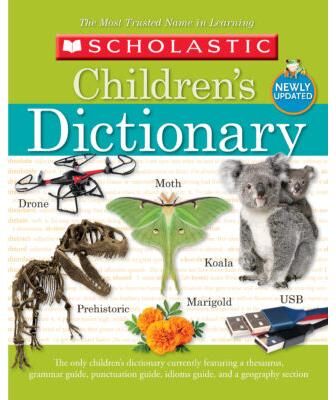
Scholastic Reference Scholastic Children's Dictionary (2019) (Hardcover) - ScholasticScholastic's trusted Children's Dictionary is back and bursting with up-to-date information on contemporary technological, scientific, and cultural terms, hundreds of new words, and in-depth sidebars featuring bold, colorful images. Featuring more...21,99 $*Shipping: 0,00 $Secure redirect to the provider
-
What can you see with a microscope?
With a microscope, you can see tiny details that are not visible to the naked eye. This includes cells, bacteria, fungi, and other microorganisms. Microscopes can also reveal the structure of materials at a microscopic level, allowing for the examination of things like crystals, fibers, and other small particles. Overall, microscopes provide a way to explore and study the intricate and often hidden world of the very small. **
-
With which microscope can I see bacteria?
You can see bacteria with a light microscope, also known as an optical microscope. This type of microscope uses visible light and lenses to magnify the image of the bacteria, allowing them to be seen at a higher resolution. However, to see bacteria in more detail, such as their internal structures, a higher-powered microscope like an electron microscope would be needed. **
-
Can you prepare with an electron microscope?
No, you cannot prepare with an electron microscope. Electron microscopes are used for imaging and analyzing samples at a very high magnification and resolution, but they are not used for sample preparation. Sample preparation for electron microscopy typically involves fixing, dehydrating, embedding, sectioning, and staining the sample using specific techniques and equipment before it can be imaged with an electron microscope. **
-
Can one see blood cells with a light microscope or does one need an electron microscope?
One can see blood cells with a light microscope. Blood cells, such as red blood cells, white blood cells, and platelets, are large enough to be visible under a light microscope, which uses visible light to magnify the sample. Electron microscopes, on the other hand, are used to visualize much smaller structures, such as viruses and cellular organelles, at a much higher magnification. Therefore, a light microscope is sufficient for observing blood cells. **
* All prices are inclusive of VAT and, if applicable, plus shipping costs. The offer information is based on the details provided by the respective shop and is updated through automated processes. Real-time updates do not occur, so deviations can occur in individual cases. ** Note: Parts of this content were created by AI.